
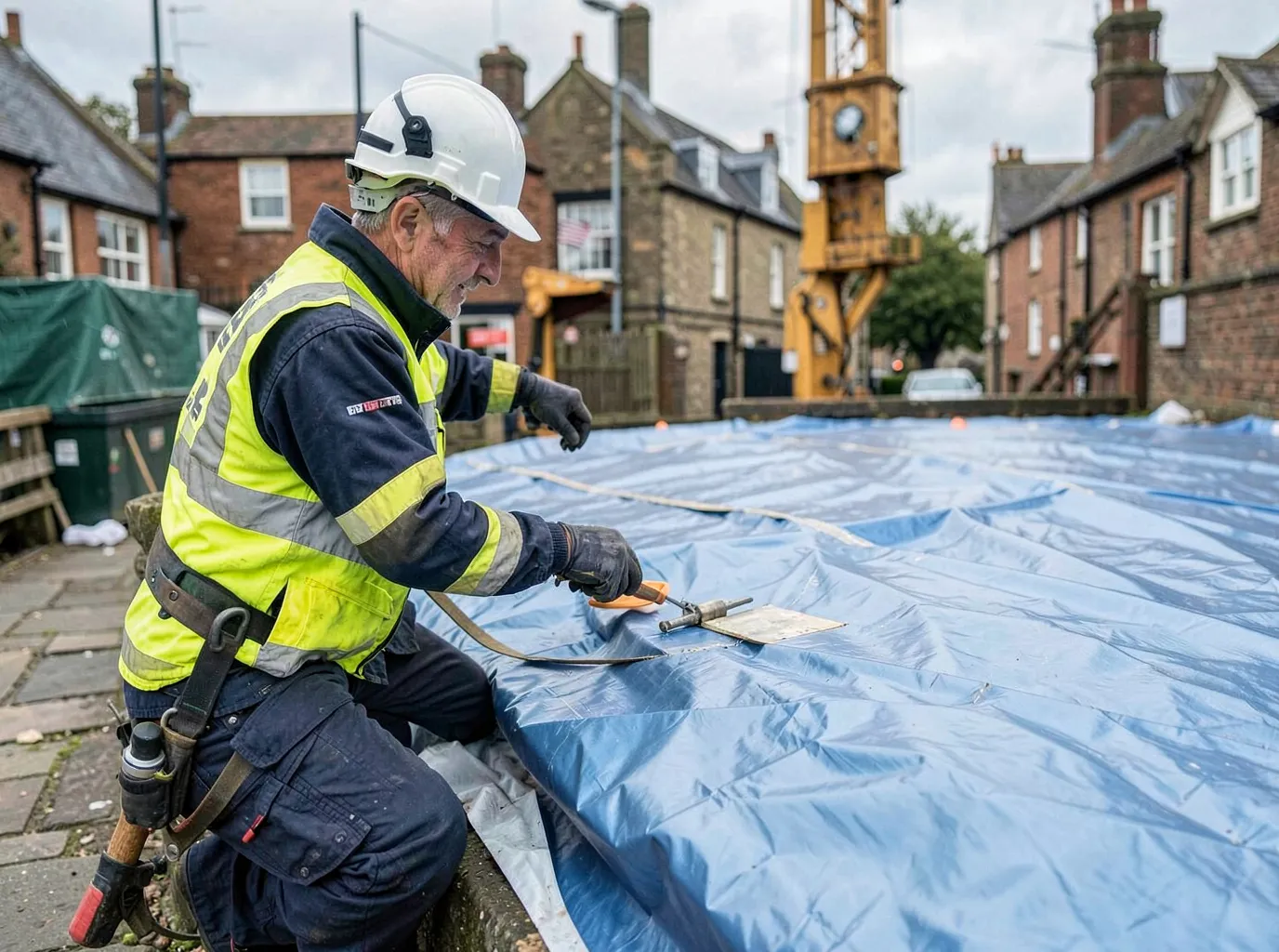
Reading’s older housing stock in neighborhoods like Hyde Park and Glenside often features slate or asphalt roofs installed decades ago. When a leak appears, a reinforced polyethylene tarp with UV stabilizers is secured over the damaged section using furring strips and masonry anchors that avoid cracking brittle flashing. Humid continental summers bring sudden downpours that can overwhelm temporary fixes if the tarp is not overlapped at least four feet past the affected area and sealed at seams with butyl tape.
Wind gusts near FirstEnergy Stadium and the higher elevations around Mount Penn require extra perimeter fastening every sixteen inches. Crews also check attic ventilation to prevent trapped moisture from causing mold on rafters, a common issue in Berks County homes built before modern underlayment standards. Tarps are never left longer than needed because prolonged sun exposure degrades the material and can mask ongoing deck rot.
Access challenges arise on the steep pitches common near the Pagoda and in West Reading row homes, where ladder placement on narrow sidewalks demands extra safety protocols. Crews document existing damage with photos before any work begins so homeowners have clear records for insurance claims involving nearby Lancaster or Allentown carriers.
Technician insight
In Reading, the thing that catches most people out with Emergency Roof Tarping is the brittle slate on pre-1950 homes in Hyde Park and Glenside. Driving fasteners too aggressively cracks the slate and turns a small leak into a much larger deck repair, especially after our hot humid summers loosen old flashing.
Sudden leak near Berks County Courthouse
Heavy rain exposed failed flashing on a two-story home in Glenside. Water was entering the second-floor ceiling. We installed a reinforced tarp over the valley and eaves, anchored without cracking the slate, and diverted flow into the gutters. The homeowner avoided further ceiling damage until a full flashing replacement could be scheduled.
Emergency Roof Tarping Services We Offer
✓Storm Damage Tarping
Rapid deployment of heavy-duty tarps over wind or hail damaged sections to prevent interior water intrusion in Berks County homes.
✓Tree Impact Tarping
Secures tarps around branches or fallen limbs on roofs in neighborhoods like Downtown Reading and Mount Penn while avoiding further structural stress.
✓Ice Dam Emergency Tarping
Temporary coverage placed along eaves and valleys to divert meltwater until ice dams can be safely removed in colder months.
✓Flashing Failure Tarping
Targeted tarping over failed chimney or valley flashing common on older slate roofs throughout Hyde Park and Glenside.
✓Wind Uplift Tarping
Re-secures lifted shingles and applies perimeter tarps rated for Pennsylvania wind loads until permanent ridge and edge repairs are scheduled.
Emergency Roof Tarping Cost in Reading, PA
| Service | Typical Range | What Affects It |
|---|---|---|
| Small section (under 100 sq ft) | $250–$450 | Single-story homes with easy ladder access in West Reading |
| Medium section (100–250 sq ft) | $450–$750 | Two-story homes or steeper pitches in Mount Penn |
| Large or complex area | $750–$1,200 | Multiple slopes, slate roofs, or limited access near Downtown Reading |
| After-hours or weekend response | $150–$300 added | Emergency calls outside standard hours |
Ranges are typical for Reading, PA and confirmed with an exact written quote before any work starts.
How it works
- 1
Site Assessment
Inspect roof from attic and exterior to locate active leak points and evaluate safe access on Reading’s varied roof pitches.
- 2
Material Selection
Choose reinforced tarp size and anchoring method based on roof age, slope, and exposure near landmarks like the Pagoda.
- 3
Tarp Installation
Position and overlap tarp with proper sealing at edges, then fasten using non-damaging methods suited to slate or asphalt surfaces.
- 4
Final Walkthrough
Confirm water is diverted away from living spaces and provide homeowner with photos and recommended next steps for permanent repair.
Pricing
Upfront quotes based on roof access, square footage affected, and anchoring difficulty.